Effective time management for students is the strategic allocation of hours to balance academic rigor with personal growth and extracurricular commitments. While mastering the semester cycle requires discipline, implementing structured frameworks like time-blocking ensures that high-impact tasks are prioritized. As one of the core systems of a model student, managing your schedule effectively prevents burnout and transforms overwhelming to-do lists into actionable daily wins.
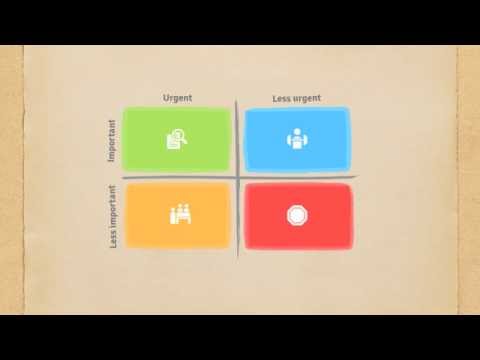
Image taken from the YouTube channel EISENHOWER , from the video titled The Eisenhower Matrix: Explained in 2 Minutes .
The Semester Cycle Strategy
A successful semester relies on front-loading your planning to align academic deadlines with personal energy levels and extracurricular peaks.
Effective time management for students begins long before the first mid-term exam. By adopting a macro-perspective of the academic term, you can identify "crunch periods" where multiple assignments converge.
This proactive approach allows you to distribute your workload more evenly, ensuring that you are not caught off guard by a sudden influx of requirements. High-achieving students treat their semester as a series of sprints and recovery periods rather than a single, exhausting marathon.
Mapping the Syllabus
The first step in any robust management system is a comprehensive syllabus audit. You should collect every syllabus at the start of the term and extract all deadlines, grade weights, and exam dates into a single master calendar.
Focus on identifying high-stakes assignments early on. If a final paper is worth 40% of your grade, your schedule should reflect that importance weeks in advance. This strategic alignment prevents the common pitfall of spending too much time on low-impact tasks while neglecting the projects that truly define your academic success.
Establishing a Weekly Rhythm
Once the major milestones are mapped, you must establish a repeatable weekly rhythm. This involves identifying fixed commitments, such as lectures and labs, and then building dynamic study blocks around them.
Consider your personal chronotype when scheduling these blocks. If you are naturally more alert in the morning, reserve those hours for complex problem-solving or dense reading. Save administrative tasks, like answering emails or organizing folders, for your low-energy afternoon dips.
- Weekly Syllabus Review: Cross-reference upcoming deadlines every Sunday evening.
- Resource Gathering: Ensure all required readings and data are available before the week begins.
- Time Audit: Compare your planned hours against actual hours worked to adjust for the following week.
- Priority Ranking: Identify the "Big Three" tasks that must be completed to move the needle on your grades.
Takeaway: Proactive planning reduces end-of-term panic.
Transitioning from broad semester goals to daily execution requires specific tools like time-blocking.
Mastering Time-Blocking for Academics and Beyond
Time-blocking is the practice of scheduling specific windows for single-tasking to eliminate the cognitive cost of context switching between study and social life.
For the modern student, the greatest enemy of productivity is not a lack of time, but the fragmentation of it. When you switch between writing an essay and checking social media, your brain incurs a "switching cost" that can reduce efficiency by up to 40%.
By using time-blocking, you create dedicated containers for specific activities. This ensures that when you are studying, you are fully immersed in the material, and when you are relaxing, you are doing so without the guilt of unfinished work hanging over your head.
Deep Work Zones
To master time management for students, you must protect your "Deep Work" zones. These are blocks of 90 to 120 minutes dedicated to cognitively demanding tasks that require intense concentration.
During these zones, all notifications should be silenced, and your environment should be optimized for focus. Deep work is where the most significant academic breakthroughs happen. It is the time when you move beyond surface-level understanding to true mastery of complex concepts.
Buffer Blocks for Extracurriculars
A rigid schedule is a fragile schedule. To maintain balanced excellence, you must incorporate buffer blocks. These are intentional gaps in your schedule designed to absorb the inevitable overruns of daily life.
Extracurricular activities, such as sports or club meetings, often run late or require additional preparation. By scheduling buffers immediately following these activities, you prevent a single delay from cascading and ruining your entire evening study plan. This flexibility is essential for maintaining long-term consistency.
| Time Window | Activity Type | Focus Level |
|---|---|---|
| 08:00 - 10:00 | Deep Work Block (Hardest Subject) | High |
| 10:30 - 12:00 | Lecture / Seminar Attendance | Medium |
| 13:00 - 14:30 | Collaborative Projects / Extracurriculars | Medium |
| 15:00 - 16:30 | Buffer Block / Administrative Tasks | Low |
| 19:00 - 20:30 | Review & Active Recall Session | Medium |
Takeaway: Protect your deep work blocks as if they were mandatory classes.
While blocking time organizes your day, the Eisenhower Matrix helps you decide what goes into those blocks first.
Using the Eisenhower Matrix to Prevent Burnout
The Eisenhower Matrix categorizes tasks by urgency and importance, allowing students to focus on 'Important but Not Urgent' goals before they escalate into high-stress crises.
Many students spend their lives in a state of reactive firefighting, dealing only with the most immediate deadline. This constant state of urgency is a primary driver of student burnout and academic fatigue.
The Eisenhower Matrix provides a visual framework to move from reactive to proactive. By categorizing your to-do list into four distinct quadrants, you can prioritize long-term growth over short-term distractions, ensuring that your energy is spent where it yields the highest return.
Identifying High-Impact Tasks
High-impact tasks usually fall into the "Important but Not Urgent" category. These include activities like long-term exam revision, internship applications, and building foundational skills.
Because these tasks don't have an immediate deadline today, they are often pushed aside for "Urgent" but "Unimportant" tasks, such as minor emails or low-value meetings. Successful students consciously allocate time to these high-impact areas to ensure they are always moving toward their broader goals of academic excellence.
Eliminating Non-Essential Distractions
The matrix also exposes the time-wasters that masquerade as productivity. If a task is neither urgent nor important, it should be ruthlessly eliminated from your schedule.
Often, students mistake "being busy" for "being productive." Scrubbing your schedule of non-essential commitments frees up the mental bandwidth required for high-level synthesis and creative thinking. This decluttering process is vital for maintaining the mental stamina needed for a rigorous academic load.
- Quadrant 1 (Urgent & Important): Do immediately (Crises, imminent deadlines).
- Quadrant 2 (Not Urgent & Important): Schedule (Planning, deep study, health).
- Quadrant 3 (Urgent & Not Important): Delegate or Minimize (Certain emails, interruptions).
- Quadrant 4 (Not Urgent & Not Important): Eliminate (Mindless scrolling, excessive TV).
Takeaway: Focus on Quadrant 2 to maintain long-term academic health.
Effective prioritization is the foundation of the core systems of a model student, ensuring you achieve excellence without sacrificing well-being.
Balancing Excellence with Extracurriculars
True student excellence involves integrating extracurricular activities as non-negotiable schedule entries that provide the mental variety necessary to sustain academic focus.
It is a common misconception that time management for students means cutting out everything except studying. In reality, students who engage in extracurriculars often perform better academically because these activities provide a necessary "cognitive break" from textbooks.
When you participate in sports, music, or volunteer work, you are developing soft skills like leadership and teamwork that are just as valuable as your GPA. The key is to treat these activities not as "optional extras" but as essential components of your daily structure.
Integrating these commitments into your calendar ensures that they are accounted for in your total energy expenditure. This prevents the "over-commitment trap" where a student takes on too many roles and suffers a decline in quality across all of them.
Furthermore, recognizing burnout red flags is a critical skill for any high-performer. If you find your interest in previously enjoyed activities waning, or if you feel a sense of dread when looking at your schedule, it is time to reassess your load.
True excellence is sustainable. By balancing the rigor of academics with the creative or physical outlet of extracurriculars, you build a resilient lifestyle that can withstand the pressures of higher education without leading to emotional exhaustion.
Takeaway: Rest and variety are productivity multipliers, not distractions.
Even the best schedule fails if digital interruptions are allowed to fragment your focus.
Eliminating Digital Distractions for Deep Focus
Digital distraction management involves setting physical and software barriers to protect the integrity of your scheduled time blocks and maximize output per hour.
The smartphone is perhaps the greatest challenge to modern time management for students. Every notification is a potential derailment of your concentration, pulling you out of a state of flow and back into a state of shallow processing.
To achieve deep focus, you must move beyond simple willpower. Willpower is a finite resource that depletes throughout the day. Instead, rely on environmental design to make focus the "path of least resistance" in your study space.
App Limit Strategies
Utilizing software tools to enforce discipline can be a game-changer for those struggling with digital hooks. Apps that block social media or news sites during specific hours act as a digital exoskeleton, supporting your focus when your internal resolve wavers.
Consider setting "Do Not Disturb" schedules that automatically activate during your deep work blocks. This removes the temptation to check messages "just for a second," which almost always turns into several minutes of wasted time.
Creating a Focused Environment
Your physical environment dictates your mental state. If you study in the same place where you play video games or sleep, your brain will struggle to enter a productive mode due to associative cues.
Designate a specific desk or library corner solely for academic work. When you enter this space, your brain should recognize it as a signal to start working. Keep your phone in another room, or at the very least, out of your direct line of sight, to reduce the "visual pull" of the device.
- Forest: A gamified timer that encourages you to stay off your phone to grow a digital tree.
- Freedom: A robust tool that blocks distracting websites and apps across all your devices simultaneously.
- Cold Turkey: A strict website blocker that is nearly impossible to bypass once a timer is set.
- Focus@Will: A service providing scientifically optimized music to enhance concentration levels.
Takeaway: Environment design is often more effective than willpower alone.
Integrating these tools creates a sustainable path toward academic mastery.
Visualizing your week can make these concepts click; watch this breakdown of how a high-performance student structures their schedule for maximum balance.
Visual Guide to Student Time Mastery
Student Time Management FAQ
Common questions regarding the implementation of these time management frameworks in a busy student life.
How do I start time management for students if I'm already halfway through the semester?
You can start managing your time mid-semester by performing a "current state" audit and prioritizing upcoming deadlines over past setbacks.
Begin by listing every assignment and exam remaining on your syllabus to visualize the remaining workload. Then, apply the 80/20 rule to focus on high-impact tasks that will stabilize your grades immediately.
Can the Eisenhower Matrix work for small daily tasks like chores?
The Eisenhower Matrix is highly effective for chores as it helps you distinguish between urgent household needs and tasks that can be deferred or automated.
Assigning chores to the "Urgent/Not Important" quadrant allows you to batch them during low-energy periods. This ensures that routine maintenance doesn't encroach on your "Urgent/Important" deep study sessions.
How do I balance intense extracurriculars like sports with a heavy STEM study load?
Balancing STEM studies with intense sports requires a strict "time-blocking" schedule that treats practice and study sessions as non-negotiable appointments.
Utilize the gaps between classes and training for "micro-study" sessions to review formulas or lab notes. Prioritizing high-intensity interval study ensures you maintain cognitive focus despite physical fatigue.
Mastering time management for students is not about filling every second with work, but about creating space for what matters most. By leveraging time-blocking and the Eisenhower Matrix, you can navigate your semester with clarity and confidence. To see how these scheduling techniques fit into a holistic high-performance lifestyle, explore the broader framework of the core systems of a model student.