A model student is a high-achieving learner who balances consistent academic excellence with leadership, emotional resilience, and the implementation of efficient study systems to maximize performance while minimizing burnout.
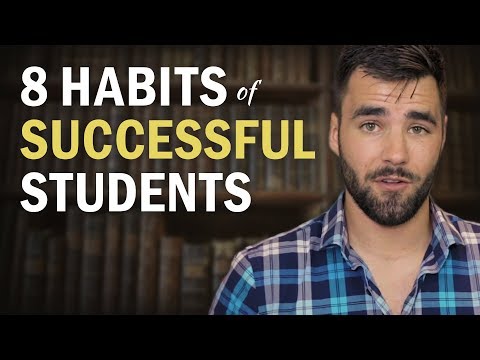
Image taken from the YouTube channel Thomas Frank , from the video titled 8 Habits of Highly Successful Students .
What Defines a Modern Model Student?
A modern model student is characterized by a blend of high academic output, ethical leadership, and the ability to adapt to diverse learning environments.
The traditional archetype of the model student—the one who simply memorizes facts and follows every instruction—is rapidly becoming obsolete in the 21st century. Today, excellence is defined by how a learner synthesizes information to solve novel problems.
High-achieving students now focus on developing a versatile skill set that allows them to pivot between different disciplines. This versatility ensures they remain competitive in a landscape where automation is replacing rote memorization.
Beyond the GPA: The Soft Skill Advantage
While high marks are necessary for certain academic thresholds, the true differentiator for a model student is their mastery of emotional intelligence and interpersonal communication. They understand that academic success is rarely a solitary endeavor.
Cultivating empathy and active listening allows these students to collaborate effectively within study groups and professional organizations. This collaborative intelligence ensures they can lead teams and manage conflict with maturity and poise.
By prioritizing soft skills, they build a network of peers and mentors who contribute to their growth. This long-term strategy provides more value than a perfect GPA ever could on its own.
The Importance of Intellectual Curiosity
A model student possesses an insatiable curiosity that extends far beyond the syllabus. They do not view education as a set of boxes to be checked, but as a lens through which they can understand the complexities of the world.
This internal motivation drives them to ask "why" and "how" instead of just "what." By exploring the intersections of different subjects, they develop a multidisciplinary perspective that fuels innovation and creative problem-solving.
This hunger for knowledge prevents stagnation and ensures they are always at the forefront of their field. It turns every lecture into an opportunity for discovery rather than a chore to be completed.
Holistic success requires more than just top-tier test scores; it requires character.
To achieve this status, one must look at the mechanics of learning itself.
The Hidden Efficiency of High-Performance Learning
Model students leverage cognitive science through active recall and spaced repetition to encode information deeply in less time than traditional cramming.
Efficiency is the primary differentiator between a model student and a peer who spends ten hours a day at a desk with minimal results. Real mastery is not about the volume of hours spent, but the intensity and quality of the cognitive engagement.
Elite learners treat their brain like a muscle that must be strategically taxed to grow. They avoid the trap of "passive learning," which creates a false sense of security while leaving information in the shallowest layers of memory.
Mastering Active Recall over Passive Reading
The most common mistake students make is re-reading their notes or highlighting textbooks. These methods lead to the fluency illusion, where the brain recognizes the material but cannot actually retrieve it during an exam.
A model student utilizes active recall, which involves closing the book and forcing the mind to reconstruct the information from scratch. This process strengthens the synaptic connections and ensures the data is readily available under pressure.
Key frameworks for implementing this include:
- Cornell Note-Taking System: A structured format that forces you to summarize and question the material as you write.
- Feynman Technique: Explaining a complex concept to a hypothetical child to identify gaps in your own understanding.
- Digital Flashcards: Using tools like Anki to automate the process of self-testing on a daily basis.
The Science of Spaced Repetition
Information begins to decay immediately after it is learned, a phenomenon known as the forgetting curve. High-performance students combat this by reviewing material at specific, increasing intervals to push the data into long-term storage.
| Study Strategy | Retention Rate (24h) | Long-Term Mastery |
|---|---|---|
| Cramming | High (Short-term) | Very Low |
| Spaced Study | High | Exceptional |
| Passive Reading | Low | Negligible |
By scheduling reviews just before the point of forgetting, the model student minimizes the total time required to master a subject. This precision allows them to achieve more in two hours than most students do in an entire weekend.
Cognitive efficiency is the engine of the model student's schedule.
Efficiency, however, is useless without a framework for managing one's mind.
Cultivating the Growth Mindset and Resilience
A growth mindset is the psychological foundation of a model student, enabling them to view academic setbacks as data points for future improvement rather than personal failures.
Academic excellence is a marathon, not a sprint, and maintaining psychological resilience is critical for long-term endurance. A model student understands that intelligence is not a fixed trait but a quality that can be expanded through effort and strategy.
This shift in perspective transforms the entire learning experience. Instead of fearing difficulty, the high-performer welcomes it as a signal that neuroplasticity is occurring and their capabilities are growing.
Overcoming the Fear of Academic Failure
Many students avoid challenging courses because they are afraid a lower grade will damage their reputation or transcript. In contrast, the model student prioritizes intellectual risk-taking over a perfect record.
They view an incorrect answer or a poor grade as a diagnostic tool. By analyzing where they went wrong, they refine their study systems and ensure the same mistake is never repeated, building a foundation of deep expertise.
Managing Stress and Burnout in High-Pressure Environments
Sustaining high performance requires an acute awareness of one’s mental state. A model student integrates stress management techniques into their routine to prevent the cognitive decline associated with chronic anxiety.
They treat sleep, nutrition, and exercise as non-negotiable study tools. This holistic approach ensures their brain remains in a state of peak readiness, allowing them to remain calm during finals week or high-stakes presentations.
By mastering their internal environment, they are able to withstand the pressures of competitive academic landscapes without sacrificing their well-being. This balance is what makes their success sustainable year after year.
Resilience is the predictor of long-term academic and professional success.
These internal habits eventually manifest as external leadership.
From the Classroom to the Community: Leadership and Ethics
A model student extends their influence beyond individual grades by fostering a collaborative environment and acting as a peer mentor.
True academic excellence is not measured solely by an individual's test scores, but by the positive impact they have on their peers. A model student understands that their personal growth is inextricably linked to the health of their community.
They seek to elevate the standards of everyone around them, creating a culture of excellence that benefits the entire institution. This approach builds a legacy that lasts far longer than a semester.
The Role of Collaborative Leadership
In group projects and seminars, these students act as ethical leaders who ensure every team member’s strengths are utilized. They do not dominate the conversation but instead facilitate a collaborative dialogue.
By acting as a peer mentor, they reinforce their own understanding of the material. Teaching a peer is the ultimate test of subject mastery, as it requires the student to simplify complex ideas into actionable insights for others.
Balancing Extracurricular Impact with Academics
A model student is often a leader in extracurricular spheres, from student government to athletic teams. They use these platforms to practice project management and ethical decision-making in real-world scenarios.
They demonstrate that it is possible to achieve holistic excellence by managing their time with precision. This ability to balance multiple high-stakes responsibilities is what prepares them for the complexities of professional life after graduation.
This commitment to civic engagement and ethical behavior ensures that they use their education for the betterment of society. They are not just learners; they are burgeoning leaders who understand their responsibility to the world.
True excellence is measured by the value one adds to their academic community.
The ultimate goal of these habits is to prepare for life beyond graduation.
To see these systems in action, watch this deep dive into the daily routines that transform average learners into model students.
Visualizing the Path to Academic Excellence
Model Student Success FAQ
Common questions regarding the evolution and expectations of a model student in the modern era.
Does being a model student require a high IQ?
No, being a model student primarily requires the implementation of efficient systems and a growth mindset rather than innate intelligence.
While cognitive ability provides a baseline, the shift toward systems-based learning allows students to achieve excellence through consistent methodology. By leveraging cognitive science, any student can optimize their learning capacity regardless of their starting IQ.
How do model students avoid burnout?
Model students avoid burnout by prioritizing 'Deep Work' over 'Busy Work' and maintaining strict boundaries for recovery.
By focusing on high-impact tasks during peak cognitive hours, they achieve superior results in less time. This efficiency prevents the "grind" mentality and ensures that rest is treated as a non-negotiable component of the academic system.
Can the model student habits help in professional life?
Yes, the discipline and systems used in school are direct precursors to high-level professional performance in the corporate and entrepreneurial worlds.
Developing emotional intelligence and cognitive systems early creates a foundation for managing complex projects and leadership responsibilities. These habits translate directly into professional reliability and executive-level efficiency.
Becoming a model student is not about achieving perfection; it is about the relentless pursuit of improvement through better systems and a commitment to serving others through your academic journey.