Sword design ergonomics focuses on the synergy between human biomechanics and blade geometry to maximize handling efficiency and safety. While aesthetic appeal is a staple of creative projects, understanding the technical specifications of hilt construction—from the center of percussion to grip friction—is essential for creating functional tools that align with foundational design sword principles. This guide explores the engineering behind the hilt to ensure every movement feels intuitive and every strike remains controlled.
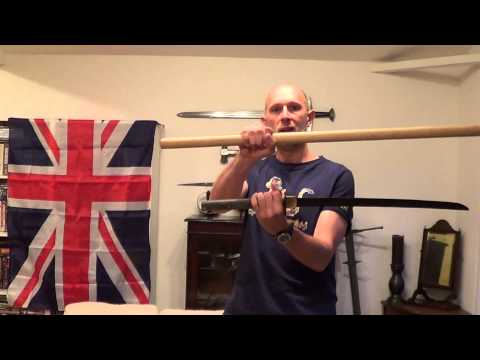
Image taken from the YouTube channel scholagladiatoria , from the video titled Sword balance, pommels and hilt length .
The Biomechanics of Grip Geometry and Indexing
Optimal sword ergonomics relies on an elliptical or waisted grip cross-section to provide tactile indexing, ensuring the wielder can feel edge alignment without visual confirmation.
In the field of sword design ergonomics, the cross-sectional shape of the hilt is the primary feedback mechanism for the user. A perfectly circular grip is a failure of engineering, as it provides no directional data to the palm, often leading to the blade "rolling" upon impact.
By employing an elliptical geometry, the designer creates a hard-wired physical link between the hand's proprioception and the blade's true edge. This Tactile Indexing allows for precise edge alignment during high-velocity swings, which is critical for maximizing cutting potential and structural integrity.
Elliptical vs. Circular Profiles
The elliptical profile provides two distinct axes. The long axis aligns with the blade's edges, while the short axis rests against the inner surfaces of the fingers and palm. This disparity in width ensures that any deviation in the blade's angle is immediately felt as a pressure shift against the hand.
Circular profiles, by contrast, offer uniform resistance in every direction. This lack of orientation data forces the wielder to rely on visual checks, slowing down reaction times in a martial context and increasing the risk of "flat-striking" the target.
Tapering and Hand Contouring
Beyond the cross-section, the longitudinal profile often features a "waisted" or tapered design. A waisted handle is widest at the ends and narrowest in the middle, naturally seating the hand in the most secure position.
This contouring prevents the hand from sliding toward the guard or pommel. By mimicking the natural hollow of a closed fist, the handle reduces the muscular effort required to maintain a secure grip, thereby delaying fatigue.
- Grip shapes: Elliptical, hexagonal, and waisted diamond.
- Advantages of waisted handles: Enhanced retention and reduced grip tension.
- Index points: The thumb-pad and the proximal joints of the fingers.
Handle geometry is the primary interface for edge control.
Moving from shape to surface, material choice dictates stability.
Optimizing Grip Friction and Material Texture
Grip friction is achieved through a combination of core material and wrapping textures, balancing tactile feedback with the prevention of slippage during high-torque rotations.
While the shape provides the indexing, the surface texture governs the reliability of that interface. Grip Friction must be high enough to prevent rotation under the stress of a bind, yet smooth enough to allow for subtle hand adjustments during technique transitions.
Common materials like wood or bone are often wrapped in organic fibers. These materials provide a porous surface that interacts with the hand's skin to create a mechanical lock without requiring an excessive squeeze.
Tensile Strength of Leather and Cordage
Leather wraps are favored for their durability and "tackiness" when properly treated. The tensile strength of the wrap ensures it stays taut over the wooden core, preventing internal shifting that could decouple the user's hand from the blade's axis.
Cordage, such as hemp or silk, offers a higher degree of mechanical friction. The ridges created by the cord provide "valleys" for the skin of the palm to sink into, creating a high-performance surface for heavy cleaving blades.
Moisture Management and Sweat Resistance
A significant factor in sword design ergonomics is the management of moisture. Perspiration can drastically reduce the coefficient of friction, leading to dangerous weapon slippage.
Natural materials like rayskin or vegetable-tanned leather absorb moisture while maintaining their texture. This prevents the hilt from becoming slick, ensuring that the wielder maintains control even in extended periods of exertion.
| Material | Friction Coefficient | Durability |
|---|---|---|
| Polished Wood | Low | High |
| Vegetable-Tanned Leather | Medium-High | Medium |
| Rayskin (Same) | Extreme | High |
Texture must prevent rotation without causing abrasive injury.
Friction ensures the hand stays put while the blade's mass moves.
Dynamic Balance: Center of Percussion and Vibration Nodes
The center of percussion (CoP) must be mathematically aligned with the blade's vibration nodes to minimize shock transfer to the user's wrist upon impact.
Ergonomics is not just about the hilt; it is about how the blade's mass behaves during impact. The Center of Percussion, often called the "sweet spot," is the point on the blade where an impact produces zero reaction force at the hand.
When a sword strikes a target outside of this optimized zone, the energy that isn't used for the cut is reflected back into the hilt. This manifests as a violent vibration that can cause joint damage or cause the wielder to drop the weapon.
Calculating the Sweet Spot
Engineers calculate the CoP based on the distribution of mass along the entire length of the tool. By manipulating the distal taper (the thinning of the blade toward the tip), a designer can shift the CoP to the desired striking area.
This alignment ensures that the kinetic energy is transferred entirely into the target. A well-aligned blade feels "dead" in the hand upon impact, meaning there is no jarring oscillation reaching the arm.
Shock Absorption in the Tang and Pommel
The tang, or the portion of the steel that extends into the hilt, acts as a bridge for these vibrations. Modern sword design ergonomics often utilize specific hilt assemblies to dampen remaining harmonics.
The pommel serves as a critical counter-weight, but its mass also dictates the location of the vibration nodes. By adjusting the pommel's weight, the designer can "tune" the blade like a musical instrument, ensuring the node rests exactly where the hand grips the hilt.
- Impact of CoP placement: Maximizes cutting efficiency and minimizes hand fatigue.
- Vibration dampening techniques: Leather spacers, peened assemblies, and resonance-tuned tangs.
- Pommel counter-weighting: Shifts the balance point and alters the rotational inertia.
Properly tuned vibration nodes prevent long-term joint stress.
With the blade balanced, the guard must then protect the hand's range of motion.
Cross-Guard Width and Protective Biomechanics
Functional cross-guard width is determined by the span of the hand and the defensive radius required to protect the lead knuckle during bind transitions.
The cross-guard is the primary defensive component of the hilt, but its size must be carefully balanced against the user's anatomical limits. An oversized guard adds unnecessary weight and can interfere with the wrist’s range of motion during complex maneuvers.
The optimal Cross-Guard Width is typically calculated based on the "defensive cone" created when the sword is held in a forward guard. It must be wide enough to catch an opposing blade sliding down the length of one's own steel without being so wide that it catches on the wielder's clothing or forearm.
Defensive Coverage Ratios
The ratio between the blade length and guard width is a key metric in biomechanical design. A shorter blade may require a more compact guard to maintain a fast pivot point, whereas a long-sword requires a wider span to cover the larger angles of incoming strikes.
Protective geometry also includes the depth of the guard. Curved quillons or rings can provide additional protection for the fingers without increasing the total weight of the hilt, allowing for a more nimble response in a bind.
Quillon Geometry and Wrist Mobility
The shape of the quillons—the arms of the cross-guard—dictates how the sword interacts with the opponent's blade. Quillons that flare forward can "trap" an opponent's edge, but they may also limit the wielder's ability to "thumb" the blade for specific technical cuts.
Ergonomic guard design ensures that the metal never bites into the wrist during extreme flexion. This freedom of movement is essential for maintaining the fluid transitions required in advanced martial arts.
- Standard guard dimensions: Typically 15-25% of the total blade length.
- Quillon flare angles: Optimized for trapping vs. parrying.
- Protection vs. Weight: Balancing coverage with the need for low rotational inertia.
Guard design must protect without restricting anatomical range of motion.
Integrating these specs requires a return to foundational design sword principles for holistic balance.
Visualizing the relationship between grip geometry and hand movement provides a clearer understanding of how these technical specifications manifest in real-world handling and combat performance.
Visualizing Biomechanical Sword Handling
Sword Design Ergonomics FAQ
Quick reference for the most common technical questions regarding the intersection of sword engineering and human anatomy.
How does handle shape affect edge alignment in sword design ergonomics?
Handle shape dictates tactile indexing, allowing the hand to subconsciously align the blade's edge via an asymmetrical or elliptical cross-section.
An oval or "waisted" grip provides proprietary feedback to the palm and fingers, preventing the rotational "rolling" common in perfectly cylindrical grips. This ensures the force vector remains coplanar with the edge during high-speed impact.
What is the ideal center of percussion for a functional sword?
The ideal center of percussion (CoP) is typically located in the distal third of the blade, where vibration nodes minimize shock transfer to the user's hand.
Specifically, the primary node should align with the anticipated impact zone to maximize energy transfer into the target rather than the hilt. A well-placed CoP reduces mechanical "sting" and prevents structural fatigue in both the sword assembly and the wielder’s joints.
Why is grip friction critical for HEMA practitioners and designers?
Grip friction is critical because it ensures torque retention and prevents rotational slippage during high-velocity directional changes or parries.
Proper friction coefficients, often achieved through materials like cord-wrapped leather or rayskin, allow for a lighter grip pressure from the user. This reduction in required squeeze force minimizes forearm muscle fatigue and maintains precise point control during complex biomechanical maneuvers.
Mastering sword design ergonomics requires a deep dive into the physics of hilt construction and the anatomical limits of the wielder. By prioritizing biomechanical geometry and calculated weight distribution, designers can produce blades that are as functional as they are beautiful. To integrate these technical hilt specs into a broader creative framework, revisit the overarching strategies outlined in the master guide for comprehensive development.