Black titanium durability is not a monolithic trait but rather a variable outcome of specific surface engineering techniques that determine how a product resists the rigors of daily use. While the aesthetic of darkened titanium is highly coveted in aerospace and jewelry, the long-term resilience of that dark finish depends on whether the material was coated, infused, or oxidized during the professional methods for making titanium black.
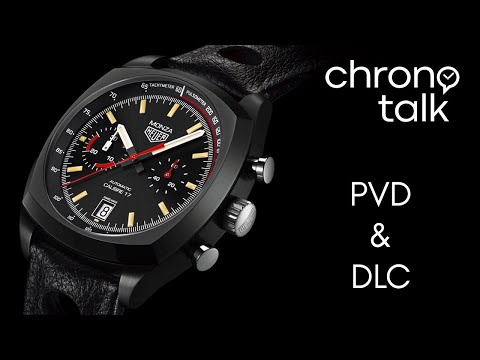
Image taken from the YouTube channel CHRONO TALK , from the video titled [EN] PVD and DLC coatings: what it is, how it's applied and what are the differences .
The Hierarchy of Black Titanium Hardness
Diamond-Like Carbon (DLC) is the most durable black titanium finish, achieving a Vickers hardness of up to 3,000 HV, which significantly outperforms standard PVD and anodized layers.
Understanding the molecular foundation of these finishes is essential for engineering components that must withstand extreme environments. Titanium itself is prized for its strength-to-weight ratio, but its surface is notoriously prone to galling and scratching without proper treatment.
The hierarchy of hardness is not merely a technical specification; it is the primary indicator of how a component will resist deformation and surface penetration. Because hardness determines scratch resistance, selecting a finish involves analyzing the load-bearing requirements of the contact surface.
DLC vs PVD Surface Tension
Diamond-Like Carbon coatings utilize a plasma-assisted chemical vapor deposition process to create a layer of amorphous carbon with high diamond-bond content. This results in a surface with exceptionally low friction coefficients and high chemical inertness.
Physical Vapor Deposition (PVD), while robust, typically involves metallic nitrides or carbides that provide high hardness but do not match the sheer structural integrity of the carbon lattice found in DLC. The surface tension in PVD layers can sometimes lead to micro-fractures if the substrate undergoes significant flex under heavy load.
Measuring Abrasion Resistance via the Taber Test
In laboratory settings, the Taber Abrasion Test is the gold standard for quantifying how these finishes perform under repetitive mechanical stress. This test involves rotating a specimen under weighted abrasive wheels to calculate the mass loss over thousands of cycles.
Results consistently show that DLC maintains its integrity for ten times as many cycles as standard anodization. This level of performance ensures that even under constant industrial use, the black finish remains functionally and aesthetically intact without revealing the substrate.
- DLC (3,000 HV)
- PVD (2,000 HV)
- Anodizing (400 HV)
Always prioritize DLC for high-friction components to ensure maximum longevity and performance.
Transitioning from lab specs to real-world usage...
Real-World 12-Month Wear: DLC vs. PVD
After 12 months of daily carry, DLC-coated titanium typically shows zero visible wear on contact points, while PVD finishes may exhibit 'silvering' or micro-scratches on sharp edges.
Longitudinal analysis of consumer goods, such as high-end timepieces and tactical equipment, reveals the stark differences between these two vacuum-coating methods. While laboratory Vickers ratings provide a baseline, the chaotic nature of daily use introduces unpredictable impact forces and abrasive particles.
Field data suggests that edge geometry influences wear speed. Parts with sharp 90-degree angles tend to concentrate stress, causing thinner coatings to fail prematurely at the apex of the curve through a process known as "edge thinning."
High-Contact Edge Retention
The most common failure point for any black coating is the edge of the component where friction is most concentrated. PVD coatings, such as Titanium Aluminum Nitride (TiAlN), provide a hard shell, but they can be worn down by constant rubbing against abrasive fabrics over 365 days.
In contrast, the amorphous structure of DLC allows it to bond more effectively at a molecular level, preventing the gradual thinning often seen in PVD. Users report that after a full year, the deep matte black of a high-quality DLC finish remains as uniform as the day it was applied.
Impact Resistance and Chipping Risks
Impact resistance is the second major factor in the 12-month wear analysis. PVD coatings are remarkably thin and can be brittle; if a tool is dropped on a hard surface, the coating may chip or "flake," exposing the bright silver titanium underneath.
DLC, while also thin, benefits from a higher elastic modulus in certain formulations, which helps it absorb micro-impacts without catastrophic delamination. However, no coating is entirely immune to high-velocity impacts that deform the underlying metal substrate itself.
| Method | 1-Year Result | Wear Sign |
|---|---|---|
| DLC | Pristine | None |
| PVD | Minor silvering | Edge fading |
| Anodized | Heavy wear | Visible scratches |
PVD is sufficient for watches, but DLC is required for tools that face daily mechanical abrasion.
Analyzing the Durability of Making Titanium Black via Anodization
Anodized black titanium is the least durable option because the color is derived from a thin oxide layer that is susceptible to chemical erosion and physical scratching.
Anodization is an electrochemical process that grows the natural oxide layer of the metal to specific thicknesses. While it can produce a wide range of colors through light interference, achieving a true, deep black is technically challenging and often results in a layer that is only a few microns thick.
This thinness means that any scratch deeper than the oxide layer will immediately reveal the underlying silver metal. Furthermore, the porous nature of the oxide layer makes it vulnerable to external contaminants that can alter its appearance or cause localized corrosion.
Chemical Sensitivity to pH
The stability of the oxide layer is highly dependent on the environment's pH levels. Exposure to strong alkaline or acidic substances can chemically "strip" the color by dissolving the oxide, leading to a blotchy appearance that cannot be easily repaired without re-anodizing the entire part.
In industrial settings, even common substances like sweat or skin oils can slowly degrade the finish if not cleaned regularly. This chemical sensitivity makes anodized black titanium unsuitable for components that undergo frequent handling or exposure to industrial cleaning agents.
Refractive Index Shifts and Fading
Because the color is a result of light refraction rather than a pigment, any change to the surface texture shifts the refractive index. This is why anodized parts often appear to "fade" even if the metal itself hasn't been significantly worn down by mechanical force.
To preserve the finish as long as possible, users should adhere to strict handling protocols to avoid premature degradation of the thin oxide film. Without these protections, the aesthetic longevity of the component is severely compromised.
- Avoid acidic cleaners
- Avoid saltwater exposure
- Avoid abrasive cloths
Anodization is a decorative choice, not an industrial-strength solution for high-wear applications.
To ensure longevity, proper maintenance is the next critical step.
Maintenance Protocols for Deep Black Aesthetics
Maintaining black titanium durability requires avoiding ultrasonic cleaners and abrasive polishing compounds which can micro-abrade the protective coating and dull the finish over time.
Once a high-performance coating is applied, the goal shifts from engineering to preservation. Many users mistakenly treat black titanium like stainless steel, using harsh polishes that actually strip the very layers intended to protect the metal substrate.
It is important to remember that prevention is better than restoration in black finishes. Unlike raw titanium, which can be re-brushed or bead-blasted to hide scratches, a damaged DLC or PVD coating usually requires a complete strip and re-coat in a vacuum chamber.
Safe Cleaning Agents
The safest way to clean black titanium is with mild, pH-neutral detergents and warm water. This removes accumulated oils and salts without reacting with the coating or the underlying oxide layer of the titanium substrate.
Ultrasonic cleaners should be used with extreme caution, as the cavitation bubbles can find micro-voids in the coating. This potentially leads to "pitting" or delamination over multiple cleaning cycles in lower-quality PVD applications where the bond is less secure.
Restoring Luster Without Removing Material
If a finish appears dull, it is often due to a buildup of skin oils or mineral deposits rather than actual wear. A thorough soak followed by a gentle wipe with a clean microfiber cloth can often restore the "factory look" without removing any structural material.
Avoid any "magic eraser" products or scouring pads, as these are essentially fine-grit abrasives. They will create matte spots on a polished finish or shiny spots on a matte finish, permanently ruining the aesthetic uniformity of the device.
- Microfiber only
- Mild pH-neutral soap
- Distilled water rinse
Gentle cleaning preserves the refractive properties of the finish and prevents the buildup of abrasive contaminants.
Selecting the Right Method for Your Project
Choosing the right finish requires balancing the durability of making titanium black against the complexity of the application process and the intended environmental exposure.
Engineers and designers must weigh the performance requirements against the budget and lead times associated with each coating method. While a high-hardness coating is desirable, the specialized vacuum chambers required for DLC and PVD can significantly increase unit costs for small batches.
When evaluating your options, the durability of making titanium black is a key factor in material selection for long-term project success. A mismatch between the finish and the environment often leads to premature failure and increased replacement costs.
Industrial vs Decorative Trade-offs
For industrial components, such as valves or pistons, the aesthetic is secondary to the functional hardness and low friction of DLC. In these cases, the high initial investment is offset by the drastically reduced maintenance and replacement intervals provided by the coating.
Conversely, for decorative items like jewelry or architectural accents that will not face mechanical abrasion, anodization provides a cost-effective way to achieve a black aesthetic. However, the designer must accept that these items will develop a "patina" or show silvering over time as they are handled.
Cost-to-Durability Ratio Analysis
A cost-to-durability analysis usually reveals that PVD offers the best "middle ground" for consumer electronics and watches. It provides a significant upgrade over anodization without the extreme price tag of medical-grade DLC coatings.
Ultimately, the decision should be driven by the expected "cycle life" of the product. If the item is intended to last a lifetime under heavy use, the superior hardness of Diamond-Like Carbon is the only viable path forward to maintain a dark finish.
- High Budget: DLC
- Mid Budget: PVD
- DIY/Low Budget: Anodizing
Match the coating hardness to the expected environment to ensure the finish outlasts the mechanical life of the component.
Concluding our deep dive into material longevity.
To see these durability principles in action, watch this side-by-side comparison of different titanium blackening methods undergoing standardized scratch and impact tests.
Visualizing Wear: The Black Titanium Stress Test
Black Titanium Durability FAQ
Quick answers to the most common concerns regarding the longevity and maintenance of black-finished titanium.
Does black titanium scratch easily?
The scratch resistance of black titanium depends entirely on the application method, with Diamond-Like Carbon (DLC) being highly resistant while anodized finishes are quite vulnerable.
DLC coatings achieve a hardness level similar to diamond, making them nearly impossible to scratch through everyday contact. In contrast, anodized black titanium features a thin oxide layer that can be scratched as easily as raw silver or gold.
Can black titanium be repaired if it chips?
Most black titanium finishes cannot be spot-repaired and require a professional stripping and re-coating process to restore the original appearance.
Unlike solid precious metals that can be buffed or polished, the black layer is a surface treatment. Once the underlying grey titanium is exposed by a deep chip or gouge, the only way to ensure a uniform finish is to remove the remaining coating and re-apply it from scratch.
Is black titanium better than tungsten for durability?
Black titanium offers superior shatter resistance compared to tungsten, though tungsten remains naturally more scratch-resistant unless the titanium is treated with a high-grade DLC coating.
Tungsten carbide is extremely hard but brittle, meaning it can crack or shatter upon heavy impact with hard surfaces. Titanium is a much tougher metal that absorbs impact, and when paired with a DLC finish, it provides a balance of impact durability and surface hardness that exceeds tungsten's overall versatility.
While black titanium offers a sleek, modern aesthetic, its performance over time is a direct consequence of the application method chosen. For those requiring the ultimate in resilience, DLC remains the industry standard, whereas PVD and anodizing serve decorative roles. To understand the technical science behind how these finishes are applied, refer back to our core guide on the various professional methods for making titanium black.