Lithium ion deep discharge recovery is scientifically possible for cells that have entered a protection-induced 'sleep mode,' though significant chemical degradation occurs if the voltage remains below the critical threshold for an extended period. While many users believe a zero-percent reading signifies a permanent failure, the distinction between a tripped safety circuit and a chemically shunted cell is vital for safely handling exhausted lithium-ion cells within the broader context of battery maintenance.
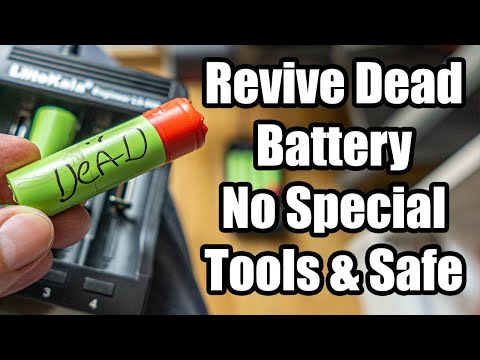
Image taken from the YouTube channel donmarkon , from the video titled Revive a Dead 18650 Works For All Types Of Li ion Battery Cells .
The Chemistry of Deep Discharge: What Happens at 0V?
Deep discharge triggers a chemical breakdown where the copper current collector dissolves into the electrolyte, potentially creating internal shorts.
When a battery reaches an absolute zero-volt state, the internal chemistry undergoes a radical and often destructive transformation. In a healthy state, the copper foil serves as a stable substrate for the anode. However, once the voltage drops below a critical threshold, the electrochemical potential allows the copper to oxidize and dissolve into the electrolyte solution.
This process of Copper Shunting is the primary reason why many manufacturers label zero-volt cells as non-recoverable. When the cell is eventually recharged, these dissolved copper ions do not necessarily return to the foil in a smooth layer. Instead, they can precipitate as metallic "needles" or dendrites that bridge the gap between the anode and cathode.
The severity of this degradation is influenced by several variables that dictate whether a cell is salvageable or a fire hazard. When dealing with exhausted lithium-ion cells, understanding the molecular shift is the first step toward safety. The primary drivers of this chemical failure include:
- Anode dissolution factors: The duration of the low-voltage state and the ambient temperature during discharge.
- Electrolyte decomposition: The breakdown of organic solvents which leads to increased acidity within the cell.
- Gas buildup: The generation of carbon dioxide and other gases as the chemical bonds within the electrolyte fail.
A zero-volt reading often indicates the protection circuit has cut off power to prevent fire risks. This safety intervention is designed to isolate the cell before the internal damage becomes catastrophic, though it cannot always prevent the underlying chemical shifts if the cell sits in a discharged state for months.
A zero-volt reading often indicates the protection circuit has cut off power to prevent fire risks.
Moving from chemical theory to the hardware that prevents it.
Myth vs. Reality: Is Your Battery Dead or Just Sleeping?
A 'sleeping' battery has simply tripped its Protection Circuit Module (PCM) and can often be reset, whereas a 'dead' battery has suffered irreversible internal shunting.
The term "dead" is frequently used as a blanket description for any battery that fails to power a device or register on a standard voltmeter. In reality, there is a massive distinction between a cell that is electrically disconnected and one that is chemically destroyed. The former is merely "sleeping" to protect itself from the very chemistry described in the previous section.
Understanding the PCM Sleep Mode
The Protection Circuit Module (PCM) acts as the battery's brain. When it detects that the voltage has dropped below a safe operating limit, it opens the circuit, effectively disconnecting the battery terminals from the external world. This creates a 0V reading at the terminals even if the internal cell still holds a 2.2V or 2.4V charge. This state is a PCM Reset opportunity rather than a signal for disposal.
The 2.5V Threshold Explained
Most lithium-ion protection logic uses 2.5V as the "point of no return" for standard operation. If the cell's internal voltage remains above this level, the PCM can be triggered to wake up by a specialized charger. If the voltage has sat below 1.5V for an extended period, the likelihood of metallic copper formation increases, transitioning the cell from a sleeping state into a chemically failed state.
| Condition | Typical Voltage | Chemical State | Recovery Action |
|---|---|---|---|
| Sleeping | 2.0V - 2.5V | Stable | Low-current "Wake-up" |
| Deeply Discharged | 1.0V - 1.9V | Unstable | Controlled Trickle (Risky) |
| Chemically Dead | < 1.0V | Degraded | Disposal Required |
Don't confuse a safety cutoff with a permanent chemical death. Proper diagnostic tools are required to determine if the internal resistance is still within a safe range for a recovery attempt.
Once you identify a sleeping cell, recovery procedures must be followed strictly.
Safe Lithium Ion Deep Discharge Recovery Protocols
Safe recovery involves a low-current 'wake-up' charge that slowly brings the voltage back to a level where the PCM allows standard charging to resume.
Attempting a lithium ion deep discharge recovery requires a methodical approach that prioritizes thermal stability over speed. Standard chargers often reject a "dead" battery because their safety logic prevents them from sending a high-amperage current into a cell with unknown internal resistance. Forced charging at high speeds is the most common cause of salvage-related accidents.
Using Smart Chargers with Revive Functions
Modern smart chargers often feature a "Revive" or "Boost" mode specifically designed for sleeping cells. These devices apply a very low Trickle Recovery current, usually between 50mA and 100mA. This gentle flow of electrons aims to slowly elevate the cell voltage back above the 3.0V threshold without causing localized overheating or gas expansion.
The Dangers of High-Current Jumping
A common but dangerous myth involves "jumping" a dead lithium-ion cell with a fully charged one. This creates a massive, unregulated current inrush. If the exhausted cell has any internal shunting, this surge of energy can cause an immediate Thermal Runaway Risk. Recovery must always be managed by a current-limiting power supply or a dedicated smart charger.
- Boost mode steps: Connect to a current-limited source and monitor for voltage movement every 60 seconds.
- Temperature monitoring: Use an infrared thermometer; any rise above 40°C (104°F) during recovery is a failure signal.
- Voltage monitoring: The cell must reach 3.0V within 15–30 minutes; failure to do so indicates a permanent internal short.
Never attempt to force-charge a battery that shows physical swelling or excessive heat. A cell that does not respond to a low-current boost within a reasonable timeframe is chemically compromised beyond repair.
Even if recovered, the battery's long-term health is often compromised compared to normal exhausted lithium-ion cells.
Identifying Irreversible Damage and Fire Risks
Batteries that fail to reach 3.0V after a few minutes of low-current charging are likely permanently damaged and should be disposed of immediately.
Success in a recovery attempt does not mean the battery has returned to its original "factory" condition. The chemical stress of a deep discharge leaves permanent scars on the cell's internal structure. Even if a battery accepts a charge and powers a device, it must be treated with a high degree of suspicion during its first few cycles post-recovery.
Internal Resistance and Capacity Loss
The most common symptom of a recovered cell is a significant increase in internal resistance. This means the battery will get hotter than usual during both charging and discharging. Furthermore, the total capacity (mAh) will be noticeably lower, as a portion of the active lithium ions are now permanently trapped in side-reactions or blocked by degraded electrolyte components.
Signs of Dendrite Growth
The most invisible and dangerous threat is the growth of metallic dendrites. These microscopic structures can slowly pierce the plastic separator between the anode and cathode. A battery might work fine for three cycles, only to develop an internal short on the fourth cycle while sitting idle, leading to a fire. This is why Thermal Runaway Risk is a constant concern for salvaged cells.
Recovery does not equal restoration; expect reduced runtime and higher internal resistance in salvaged cells.
Always perform the first five charge cycles of a recovered battery inside a fire-proof charging bag or a metal container. If the cell displays any "self-discharge" behavior—losing significant voltage while not in use—it must be retired and recycled immediately to prevent potential catastrophe.
Final thoughts on maintaining safety during battery salvage.
Witness the technical process of applying a low-current 'boost' to reset a battery's internal protection circuit safely.
Visualizing the Recovery Process
Lithium Ion Deep Discharge Recovery FAQ
Commonly asked questions regarding the safety and efficacy of reviving over-discharged lithium-ion cells.
Is it safe to charge a lithium battery that hit 0 volts?
No, attempting to charge a lithium-ion cell that has remained at 0 volts for an extended period is inherently dangerous due to the risk of internal short circuits. When a cell drops below approximately 1.5V, the copper current collector begins to dissolve into the electrolyte, forming microscopic metallic dendrites.
These dendrites can bridge the separator during the recharging process, leading to localized heating, thermal runaway, or combustion. You should never attempt to revive a cell that has been sitting at zero volts without specialized equipment and a professional stability assessment.
How can I tell if my battery is in sleep mode or actually dead?
You can distinguish a "sleeping" battery from a dead one by measuring the terminal voltage at the cell level versus the battery pack terminals. A sleeping battery typically has a tripped Battery Management System (BMS) that reads 0V at the output despite having charge remaining in the internal cells.
If the individual cell voltage is above 2.0V but the output is 0V, the BMS is likely in protection mode and can often be reset. However, if the internal cell itself reads below 1.5V, it has likely suffered irreversible chemical degradation and should be considered dead.
Can a standard charger revive a deep-discharged battery?
A standard commercial charger cannot revive a deep-discharged battery because its safety firmware will reject any cell detected below a specific voltage threshold, usually 2.5V to 3.0V. These chargers are programmed to flag low-voltage cells as "defective" to prevent users from charging potentially compromised or unstable chemistry.
Attempting to bypass these safety features using "jump-starting" techniques is highly discouraged as it circumvents the thermal protection protocols required for safe recovery. Recovery requires a specialized "pre-charge" phase at extremely low currents to safely stabilize the ions before a standard charging cycle can begin.
While lithium ion deep discharge recovery can occasionally salvage a dormant device, it is not a permanent solution for cells that have undergone significant chemical shunting. Understanding these risks is part of responsible device ownership, especially when compared to the broader mechanical and chemical issues found in our guide on why a battery exhausted its lifecycle prematurely. Always prioritize safety and replace cells that show signs of instability.